C Compiler Errors: Find the Right Fix
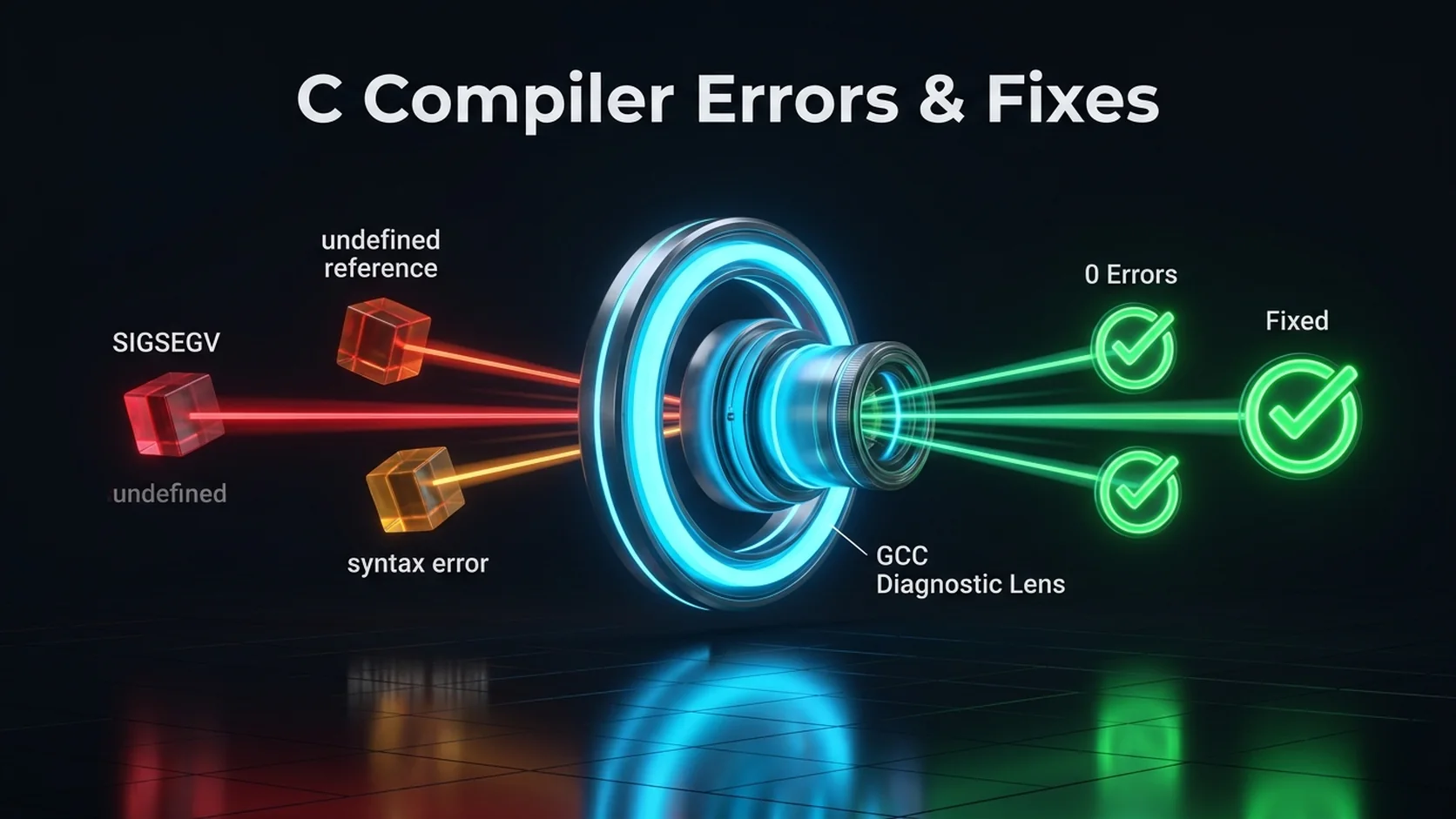
Start with the first diagnostic in your compiler output. Match the message below, check the likely cause, and open the guide for an explanation and corrected example. Later errors can be consequences of the first one.
Match your error message
Compiler Syntax
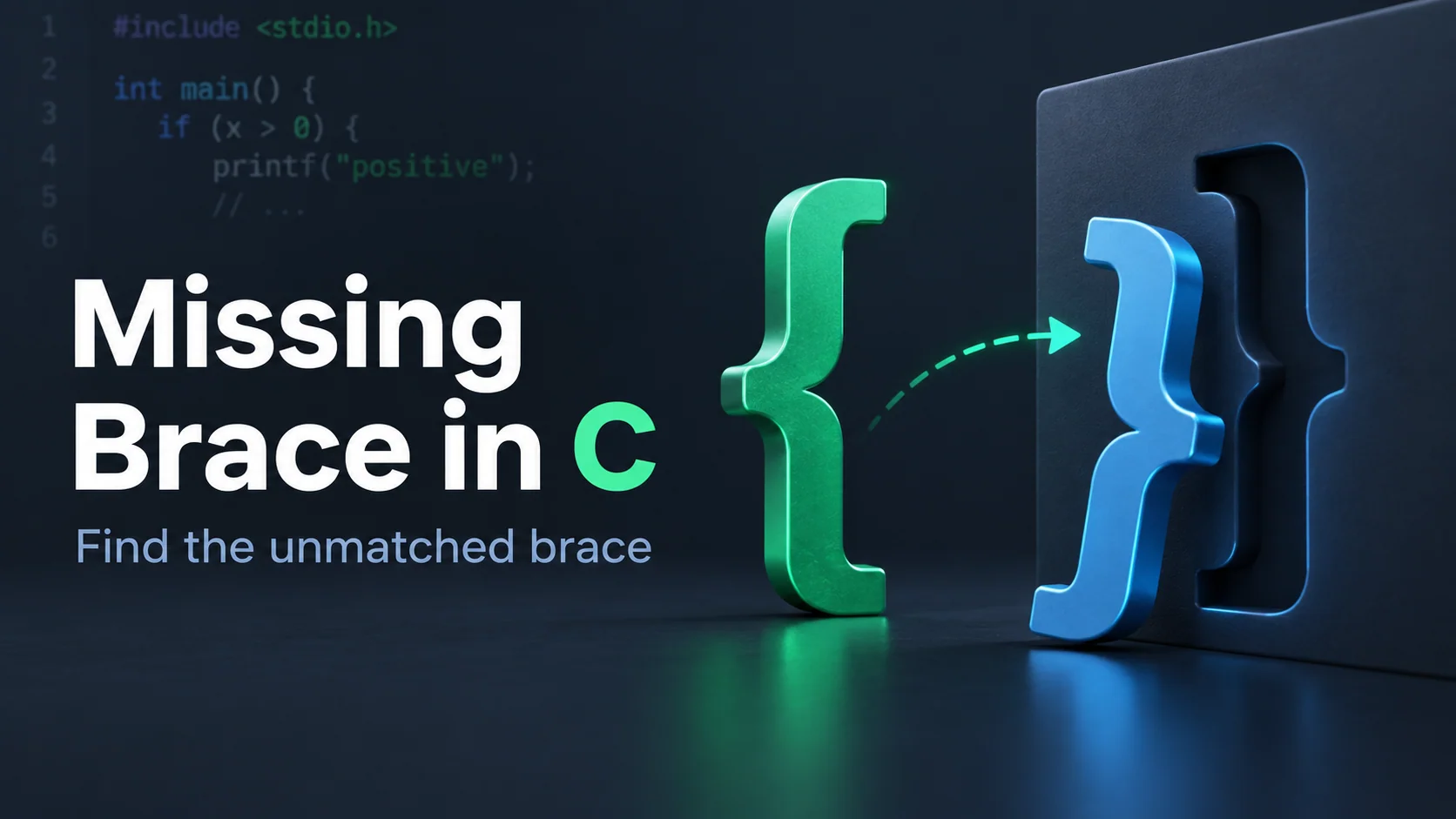
expected declaration or statement at end of input
Fix “expected declaration at end of input” in C
Check first: Look for an unclosed function or block earlier in the file. Match each opening brace to its intended closing brace; do not add a brace blindly.
Compiler Syntax
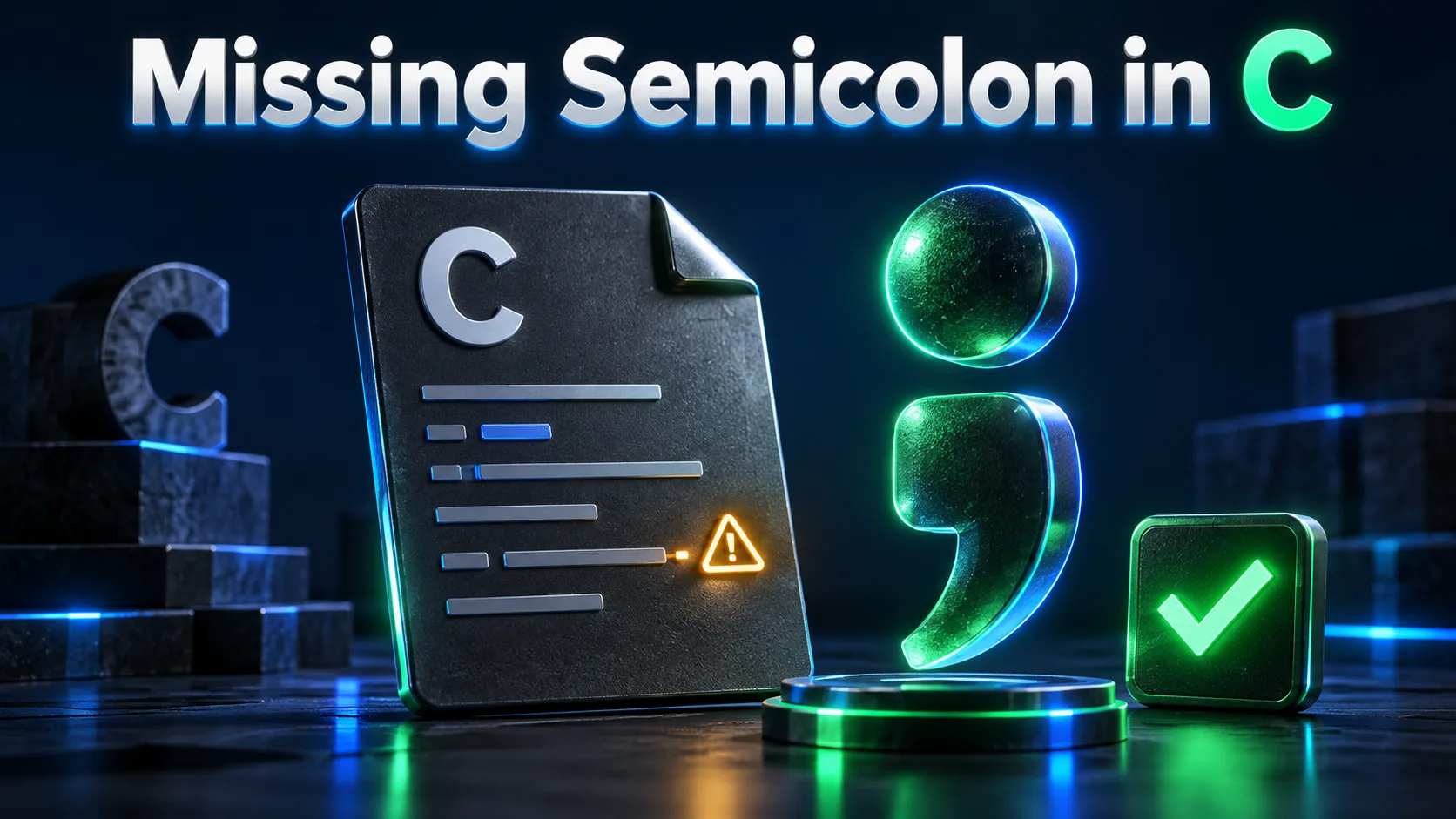
expected ';' before …
Expected Semicolon in C: Common Compiler Errors & Solutions
Check first: Inspect the statement before the reported token. Check for a missing semicolon after a declaration, expression, or struct definition.
Type & Declaration
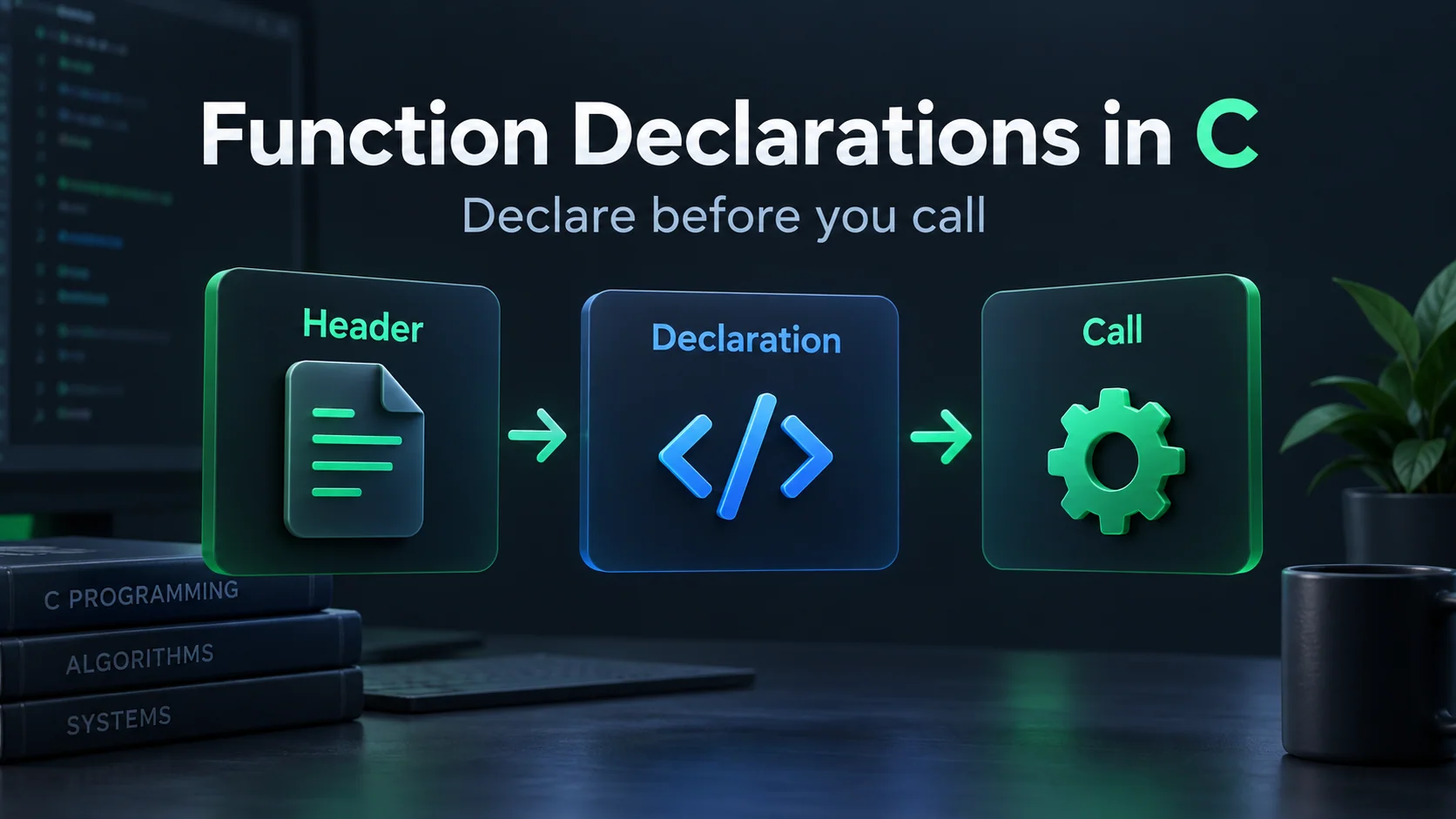
implicit declaration of function
Implicit Declaration of Function in C: How to Fix It
Check first: Include the header that declares the function, or put a matching prototype before the call. Check spelling rather than suppressing the diagnostic.
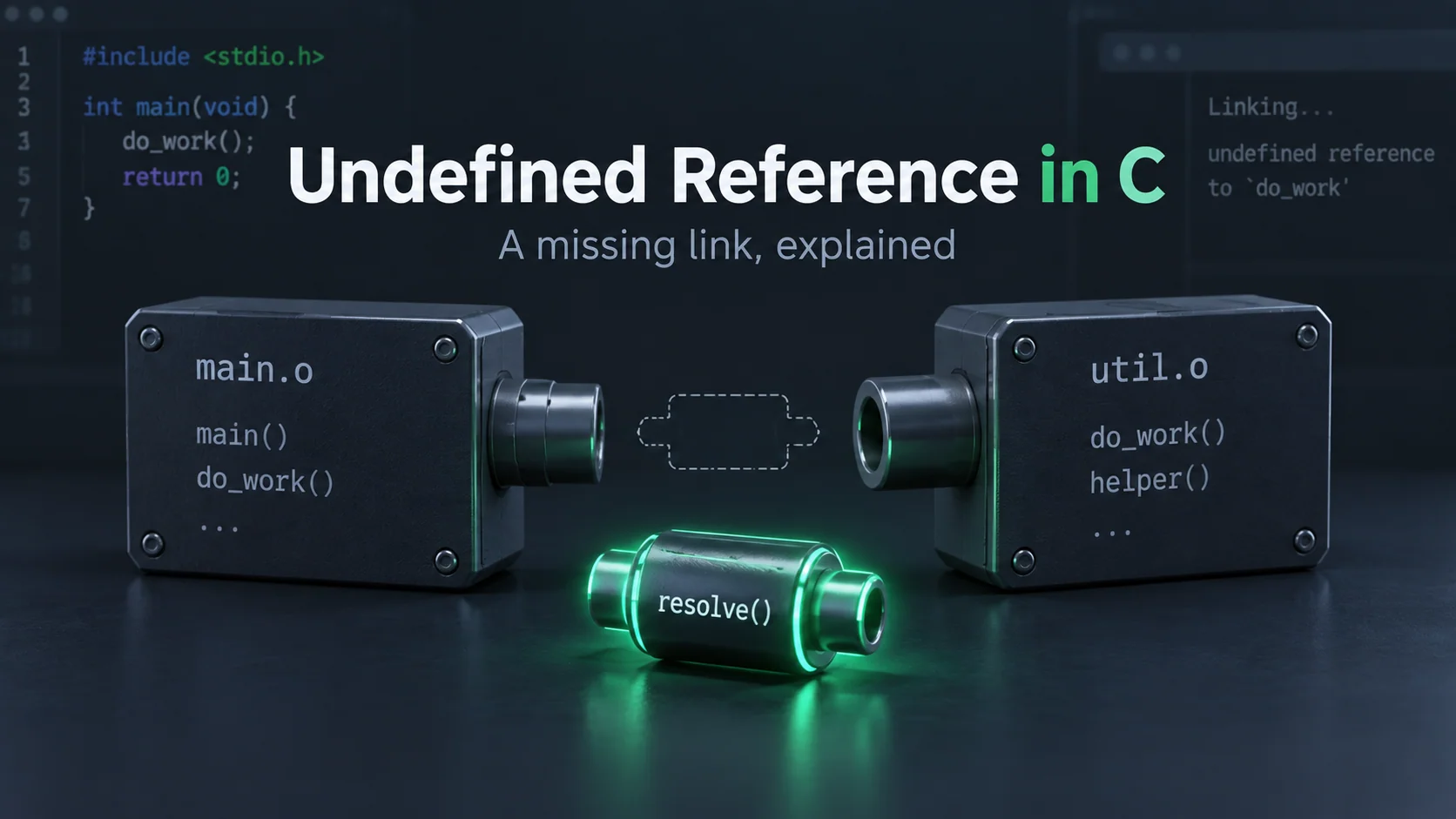
Linker Errors
undefined reference to … / ld returned 1 exit status
Undefined Reference in C: Fix Main and Linker Errors
Check first: Read the undefined-reference message before the final linker status. Confirm the function is defined and its source file or library is included in the link.
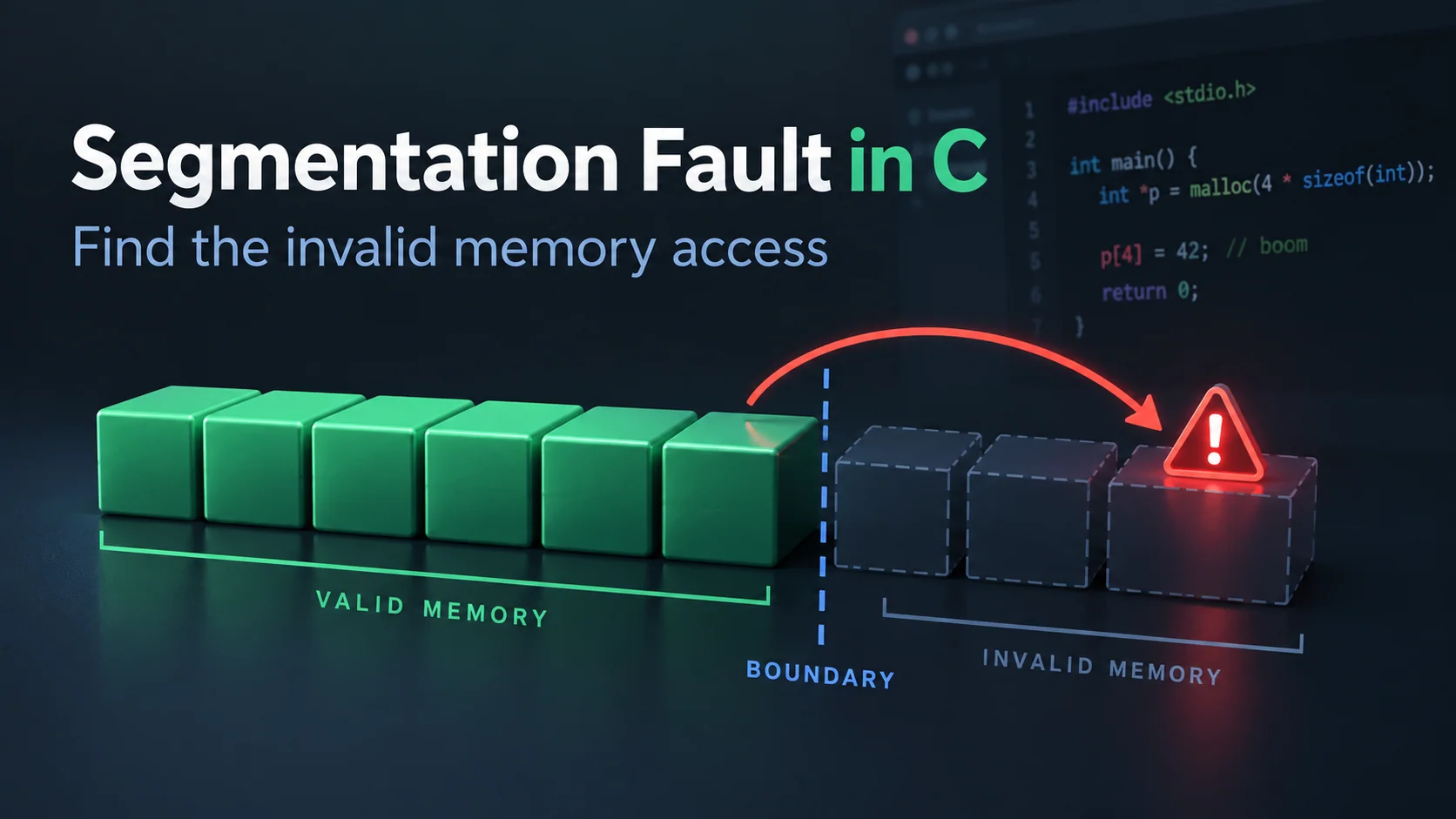
Runtime Signals
Segmentation fault (core dumped) / SIGSEGV
Segmentation Fault in C: Common Causes and How to Fix It
Check first: Check the failing memory access: pointer validity, array bounds, object lifetime, and writes to string literals. A backtrace or sanitizer can help locate it.
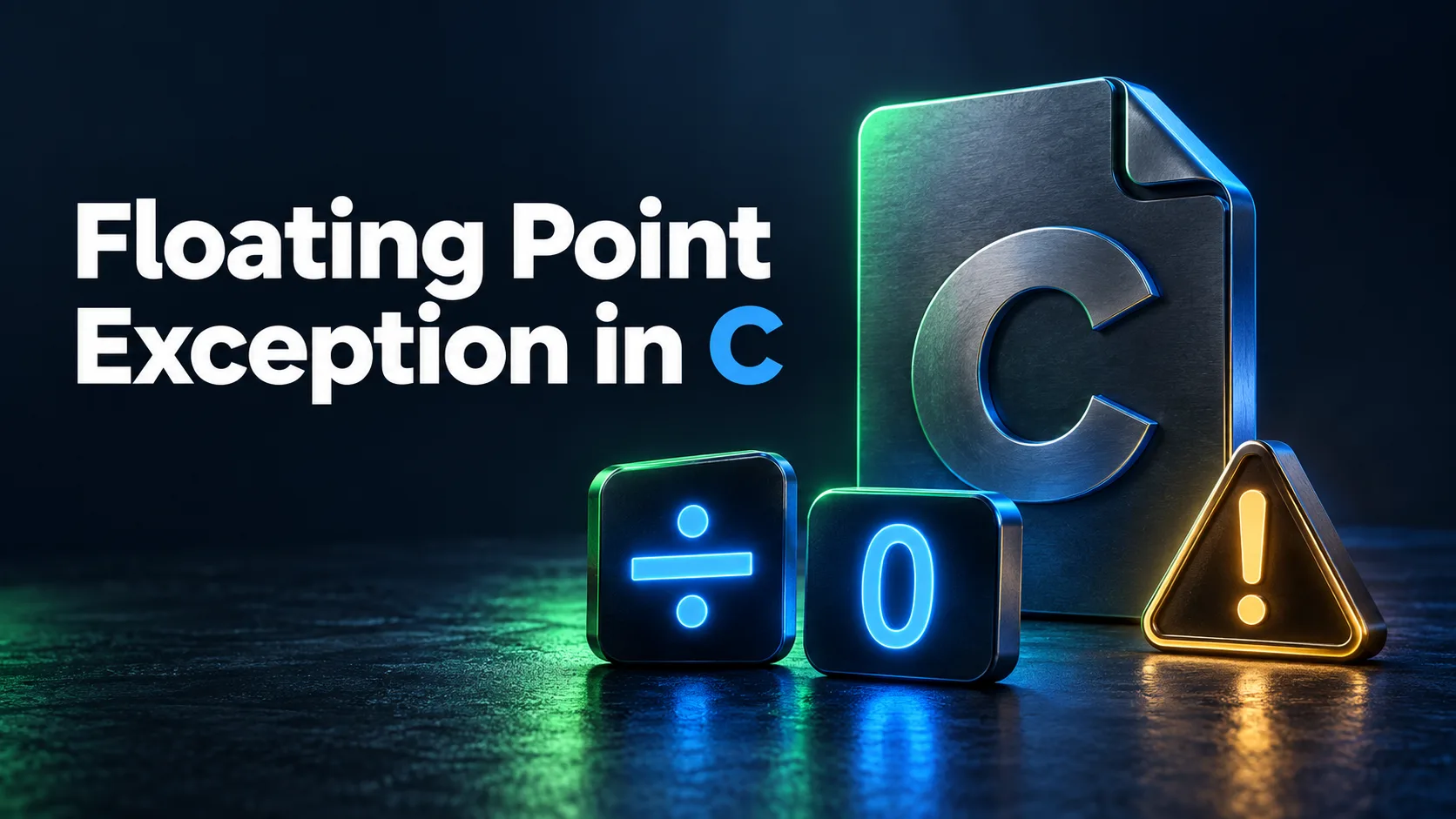
Runtime Signals
Floating point exception (core dumped) / SIGFPE
Floating Point Exception in C (SIGFPE): Root Causes & Fixes
Check first: Inspect integer division and remainder operations for a zero divisor or signed quotient overflow. Despite the name, SIGFPE is not limited to floating-point arithmetic.
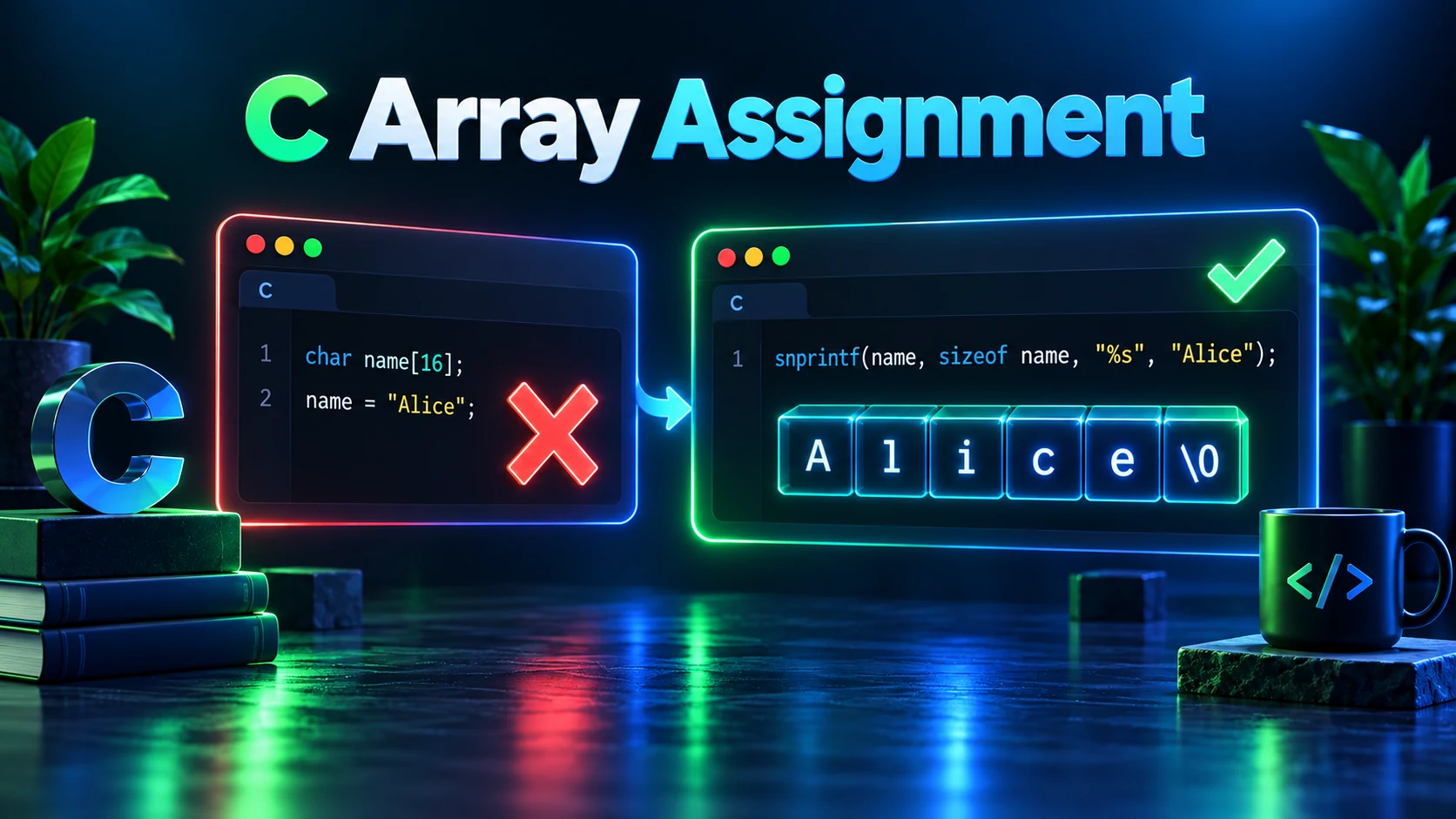
Type & Declaration
assignment to expression with array type
Assignment to Expression with Array Type in C: Why It Fails
Check first: Initialize the array at declaration or copy elements into its storage with checked capacity. Array assignment is not pointer reassignment.
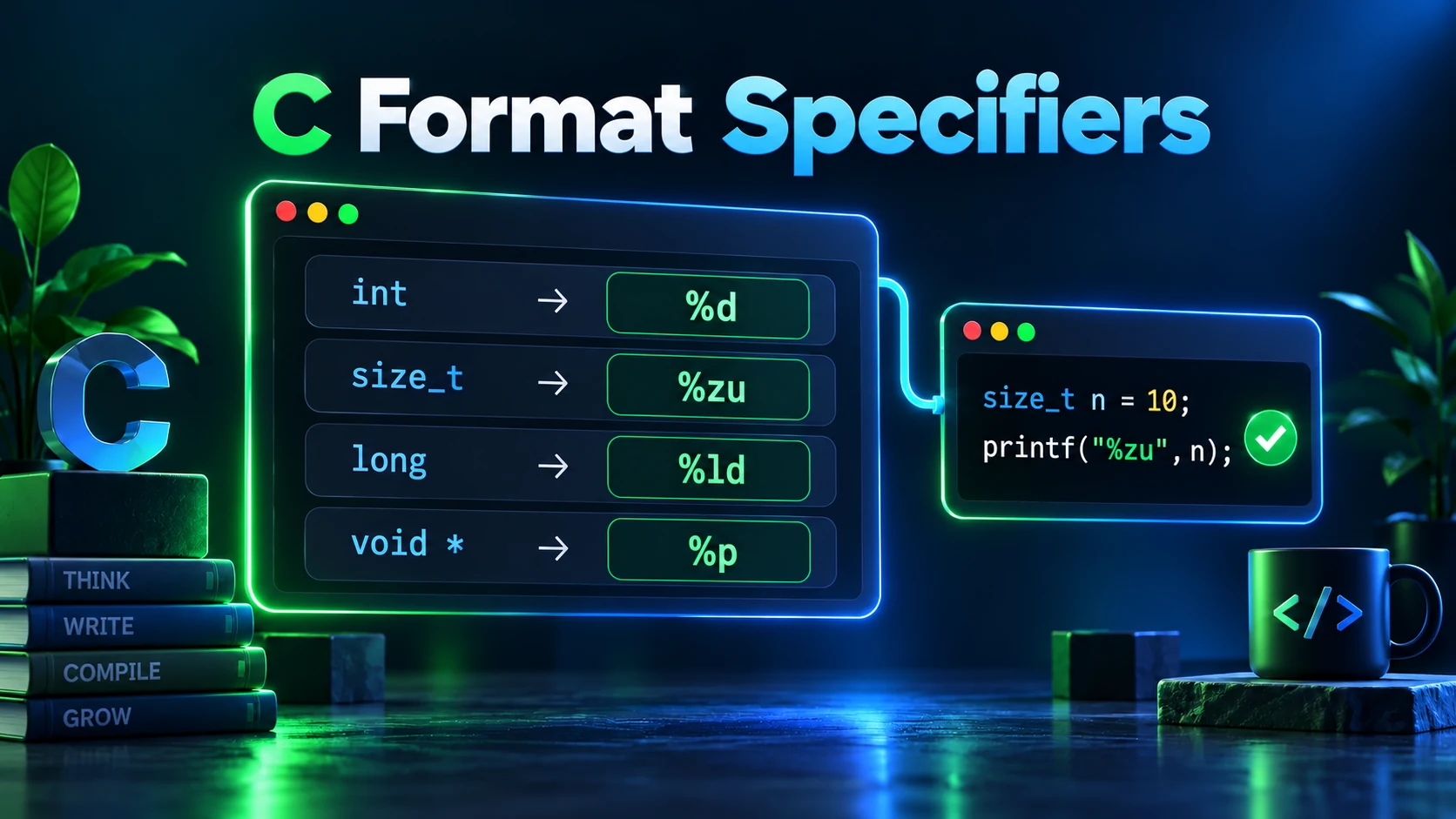
Type & Declaration
format expects argument of type / printf format mismatch
Format Expects Argument of Type in C: Match printf Specifiers
Check first: Match the conversion to the actual argument type: %zu for size_t, %ld for long and %p for a void pointer.
Compiler wording varies by version. Signal numbers and shell exit statuses are platform-dependent; use the diagnostic and failing operation rather than an exit code alone.